Should You Cover Your AC for Winter?
Should you cover your outdoor AC this winter? Learn the difference between seasonal wraps, heat pumps, and approved guards before buying a cover.
Published 2026-10-09 · Bravo Mechanical, Westchester County, NY
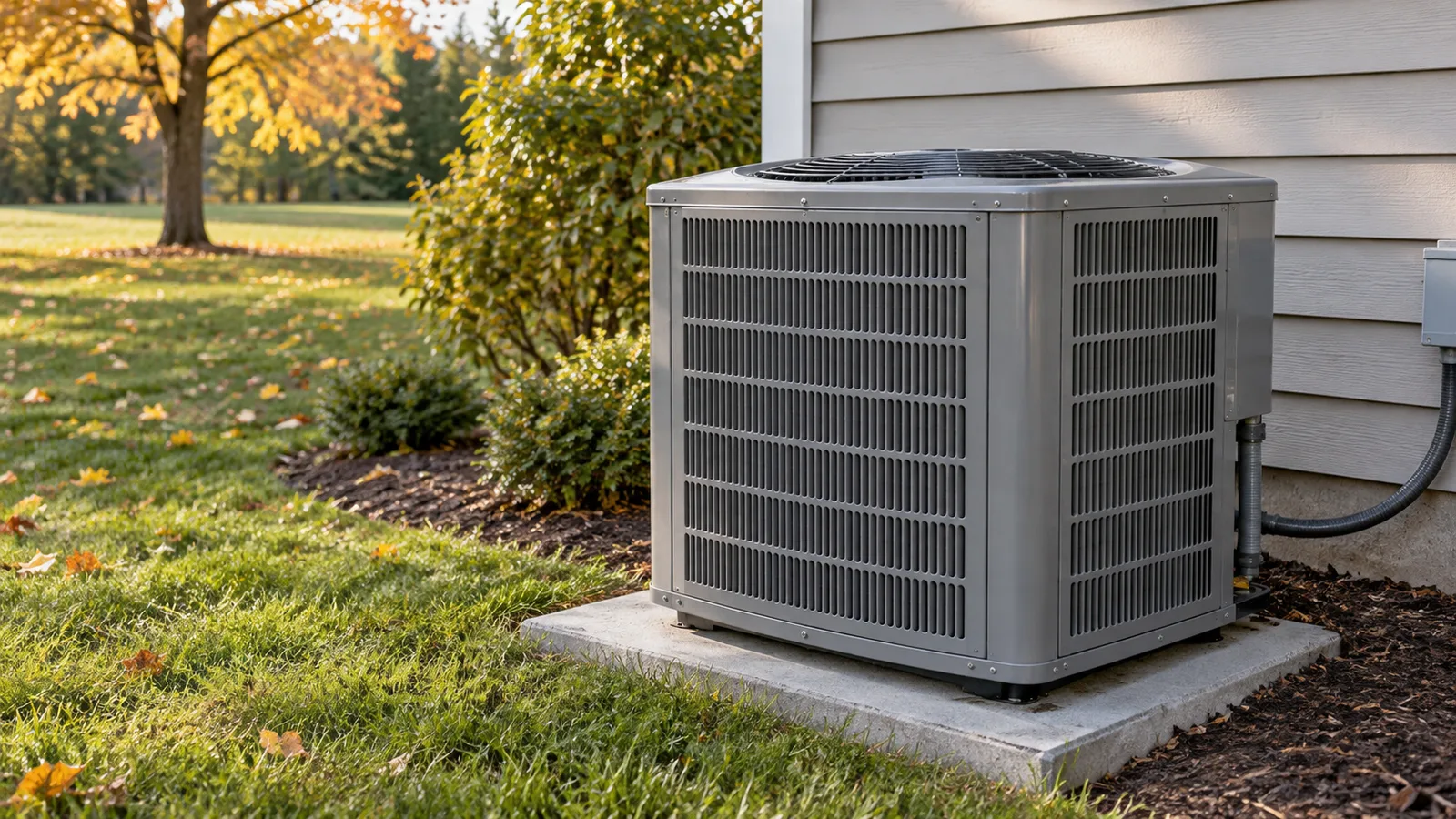
Quick answer: You generally do not need to wrap a modern outdoor air conditioner for winter. Start with your equipment manufacturer's instructions, not a universal cover purchase. A cooling-only unit may have a model-appropriate off-season protection option, but a heat pump that provides winter heating must remain free of seasonal wraps. Never operate equipment with a seasonal cover in place.
For a Westchester homeowner or property manager, the useful question is not simply “Which cover fits?” It is “What does this outdoor unit do, and what protection does its manufacturer actually allow?” This guide helps you gather that information without opening equipment or changing electrical controls. It is general planning guidance, not a diagnosis or a substitute for your model's manual.
Identify the outdoor unit before buying anything
Start with your installation paperwork, equipment schedule, or service invoice. Look for the outdoor model number and whether the system is listed as air conditioning only or as a heat pump. If an exterior label is readable from a safe standing position, a photograph can help a professional identify it. Do not remove a panel to search for identification.
Avoid deciding from appearance alone. A large outdoor cabinet is not automatically summer-only equipment. Nor does having a furnace prove the outdoor unit can be put away for winter: the home may have a dual-fuel arrangement that includes a heat pump. Ductless equipment also needs to be identified by model and function rather than by the shape of its cabinet.
If you cannot confirm the system type, leave it uncovered and ask. A useful message is: “This is the outdoor model serving our upstairs system. Does it provide heat, and is any winter accessory approved for it?” That is more actionable than asking a retailer for a cover sized only by cabinet dimensions.
Why a full wrap is usually the wrong starting point
Lennox's winter-cover guidance says modern outdoor AC equipment generally does not require winterization. It cautions that full, non-breathable covers can retain moisture and create corrosion or pest concerns. It also acknowledges situations where suitable protection against falling debris may be appropriate. That supports a model-and-site decision, not a blanket promise that every cover is harmful or every uncovered unit is protected from every hazard.
Treat product descriptions such as “universal,” “weatherproof,” and “heavy duty” as shopping claims, not proof of equipment compatibility. Before ordering, ask for the accessory instructions and compare them with the outdoor unit's documentation. If the seller cannot explain whether the product is for storage or operating equipment, do not guess.
Keep the receipt, product identification, and written recommendation together if you do buy an approved accessory. That creates a usable record for whoever maintains the equipment next. A cover left by a previous owner, without instructions or identification, should not be treated as evidence that it belongs on your system.
Heat pumps need a different winter plan
Do not put a seasonal fabric wrap, tarp, or storage cover over an outdoor heat pump that may operate for heating. This includes a ductless heat pump or the heat-pump portion of a dual-fuel system. Do not assume it will remain idle because a furnace is running at a particular moment.
Trane's extreme-winter guidance warns against solid covers on heat pumps and distinguishes its purpose-built WeatherGuard protection, which may remain year-round. A manufacturer-engineered guard is not the same thing as wrapping a cabinet. Leave existing approved components alone; have a professional confirm compatibility if you are unsure what is installed.
If your question began because the thermostat shows auxiliary heat, covering the outdoor unit is not a remedy. Read our AUX versus Emergency Heat guide for the control distinction, and report unusual operation to a technician rather than changing equipment protection or wiring.
Compare the options before making a decision
Situation Sensible next step Avoid
--- --- ---
Cooling-only AC, no specific hazard identified Consult the model's owner instructions before buying protection Assuming winter requires a full wrap
Cooling-only AC under falling debris Ask about a compatible accessory and the source of the hazard Improvised boards, weights, or straps
Heat pump used for winter heating Keep seasonal covers off; verify any installed engineered guard Treating it as summer-only equipment
System type or cover purpose unknown Send model information to an HVAC professional Trial operation with a cover installed
Damaged cabinet or persistent ice with unusual noise Arrange a professional assessment Hiding the problem under a cover
This comparison is a decision aid, not an installation specification. It does not establish clearance distances, structural support, attachment methods, or a safe outdoor operating temperature for your equipment. Those details belong to the applicable manufacturer instructions and a qualified assessment.
If a breathable off-season cover is recommended
Trane's AC maintenance guidance permits considering breathable protection for an inactive AC in suitable conditions, rejects tarps or other solid coverings that trap moisture, and says never to run the AC with its protective cover installed. This is not permission to select any fabric cover for any brand.
Ask the person recommending it to answer three questions in writing: Which exact unit and accessory are involved? When must the accessory be removed? Who will confirm removal before anyone requests cooling? If the answer depends on a shutdown procedure, have the technician explain and perform any work outside ordinary owner operation. This article does not instruct you to pull a disconnect, switch breakers, alter a thermostat's wiring, or open a cabinet.
Do not use a calendar date as your only reminder. Another occupant, a remote thermostat user, or a property manager may request cooling unexpectedly. Put the approved seasonal procedure in the household or building's maintenance record, with a named person responsible for checking it. A phone reminder supplements that record; it does not make operation with a cover safe.
A safe outdoor observation checklist
Use a ground-level walkaround to prepare for a service conversation. Stay away from moving parts, electrical equipment, unstable surfaces, and overhead hazards.
- Confirm the unit: Match the location to the room, apartment, or thermostat it serves. Mark uncertainty rather than inventing an equipment label.
- Record the model: Use existing paperwork or a safely visible exterior label. Do not open the unit.
- Describe the concern: Is it ordinary weather exposure, falling leaves, runoff from above, visible damage, or an unidentified accessory?
- Photograph the surroundings: A wide view can show nearby vegetation, storage, or the position of an overhang. Avoid including neighbors or private identifying details.
- Note access problems: Tell the service provider about a locked enclosure, narrow walkway, roof location, or other obstacle before the visit.
- Keep a symptom log: Record when unusual noise or ice was noticed and whether heating was working. Do not recreate the problem for a video.
- Leave technical work alone: No panel removal, refrigerant work, electrical testing, pressure washing, ice chipping, hot-water thawing, or chemical de-icing.
Trane specifically recommends professional help for excessive ice buildup accompanied by noise. Do not reach into a grille or attempt to free a fan. If a roof edge or tree presents a falling-object hazard, keep clear and arrange appropriate professional assessment rather than climbing above the unit to install a makeshift shield.
For rentals and buildings with several systems
Make one equipment-specific record rather than giving a caretaker the instruction “cover all the air conditioners.” Include the unit location, model, heating function if confirmed, approved accessory if any, and the person authorized to arrange service. Two similar-looking units need not have the same instructions.
Give residents a clear reporting route: whom to contact about noise, damage, or lost heating, and what information to provide. Ask contractors to identify which equipment their recommendation concerns. When staff changes, transfer the record along with keys and maintenance contacts. These administrative steps are more useful than purchasing identical covers before anyone has identified the systems.
Questions to ask during a service visit
Ask whether the outdoor unit is cooling-only or participates in heating; whether its present surroundings meet the model's requirements; and whether the concern calls for maintenance, an approved accessory, or attention to the surrounding property. Request the applicable instructions rather than a verbal rule that applies to every unit.
If the AC had unresolved cooling problems at the end of summer, mention those separately. A cover decision should not replace AC repair assessment. Provide the symptoms you observed without deciding in advance that a coil, motor, or refrigerant issue is responsible.
Frequently asked questions
Should I cover my AC just because snow is forecast?
Do not make an automatic purchase or wrap the equipment based only on a forecast. Identify its function and consult its manufacturer instructions. A documented site hazard deserves a specific plan; it does not justify improvising a storage cover for operating equipment.
Can I use a tarp I already own?
Do not substitute a tarp for a model-appropriate accessory. Ask for the equipment's approved protection guidance instead. Having a tarp available is not a reason to use it on HVAC equipment.
Does a factory weather guard need to come off for heating?
Not necessarily. An engineered, compatible guard may be intended to remain installed during operation. Do not remove factory components or apply seasonal-wrap instructions to them; verify the exact accessory and model with a professional.
What if someone already ran the AC with a seasonal cover on?
Stop requesting cooling with the normal thermostat controls and contact an HVAC professional for advice before restarting. Explain what happened and any noise or loss of cooling you noticed. Do not open the unit or assume that removing the cover proves nothing was affected.
Get an equipment-specific answer
If you are unsure what serves your Westchester home or building, contact Bravo Mechanical with the outdoor model information and your question. Ask for an assessment of the equipment and its surroundings before buying a winter accessory. The goal is a clear, documented plan for your system—not another product you may not need.
Request service or an estimate or call (914) 361-9142. Serving 34 listed communities in Westchester County, NY.