Window Condensation and Winter Humidity
Learn what window condensation means, how to check indoor humidity safely, and when Westchester homeowners should seek HVAC or window evaluation.
Published 2026-10-02 · Bravo Mechanical, Westchester County, NY
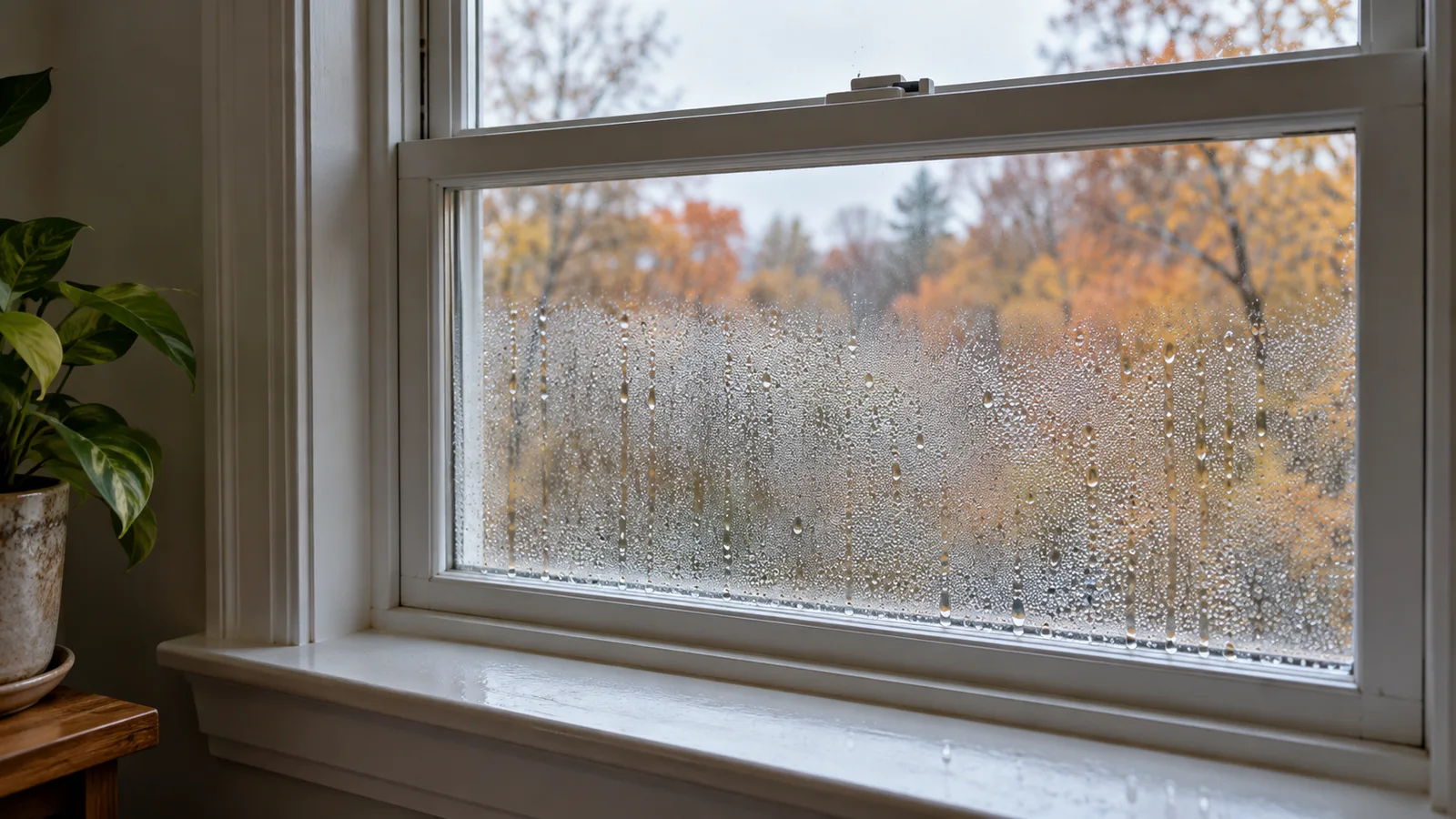
Quick answer: Moisture on the room side of a cold window can form when indoor water vapor meets glass cold enough for condensation. It does not, by itself, prove that the furnace or window needs replacement. Identify where the water is, measure room humidity, and look for moisture sources. Reduce unnecessary humidification and arrange an evaluation if wetting persists, damage appears, or the source is unclear. Moisture between sealed panes is a different window-service question.
First, locate the moisture
A useful service request starts with “water on the inside glass in two bedrooms,” not simply “bad windows.” From a safe indoor position, observe whether droplets are on the room-facing surface, outside, or apparently trapped between panes. Do not lean out, climb, remove glazing, or dismantle the window to investigate.
Andersen's explanation of window condensation distinguishes interior and exterior surface moisture. Indoor condensation involves both moisture in the air and the temperature of the surface. Outside condensation does not establish that indoor humidity is excessive. Repeated interior wetting can damage finishes and materials, so it deserves attention even if the heating system seems comfortable.
If a haze appears between the panes of an insulated glass unit and cannot be wiped from the accessible interior surface, document it for the window manufacturer or a window professional. Andersen's winter window guidance identifies between-pane condensation as a possible sign of a failed seal. That is not something a furnace filter change can repair.
Water arriving after rain, a wet wall above the frame, or staining around trim also warrants a building or window investigation. Do not assume every wet sill is condensation. Tell the evaluator whether the problem follows cold mornings, rainfall, cooking, showers, or humidifier use.
What humidity number should you use?
Relative humidity describes moisture relative to what air can hold at its current temperature. A reading is useful context, not a diagnosis of a window, duct system, or health complaint. Record the room temperature alongside it rather than comparing humidity numbers taken under very different conditions.
EPA's indoor-air guidance recommends an indoor humidity range of 30–50%. Treat that as general guidance, not a promise that every window will remain dry at 50% in cold weather. A sufficiently cold surface can still collect moisture. The appropriate operating setting must account for the actual home, outdoor conditions, and equipment instructions.
Do not raise a humidifier just to reach the upper end of a range while water is already forming on glass. Conversely, one questionable reading does not justify buying a whole-house dehumidifier. First confirm how the meter should be placed and allowed to settle, using its instructions. Keep a short record from the affected room and another room for comparison.
A safe observation checklist
Use this checklist before an HVAC appointment. It creates a useful description without opening heating equipment or building cavities:
1. Name the rooms and surfaces. Note whether one window, one room, or several rooms are affected. Photograph the glass and sill, avoiding people, addresses, and personal documents. 2. Record when it happens. Include the time, approximate outdoor conditions, room temperature, and humidity reading. Note whether moisture clears later or leaves the sill wet. 3. List recent changes. Mention a new humidifier, changed control setting, replacement windows, weatherization work, or a change in household routines. A timing relationship is a clue, not proof of cause. 4. Describe moisture-producing activities. Note showers, cooking, and indoor laundry drying near the affected period. Write down which existing exhaust fans were operating. 5. Check visible obstructions. Observe furniture or heavy coverings that block normal room airflow. Keep required clearances around radiators, baseboards, and registers; do not move hot equipment or alter ducts. 6. Report wet materials promptly. Distinguish a brief film on glass from repeated puddling, soft trim, staining, or a persistent musty odor. Do not remove trim or disturb suspected mold to take a better photograph.
For a managed apartment or condominium, send the record to the responsible manager and ask who coordinates the HVAC and window work. Do not alter common ventilation, roof equipment, or shared heating controls. The record helps separate an individual room complaint from a building-wide pattern without assuming the same repair fits every unit.
Safe first steps—and their limits
EPA's moisture-control guidance emphasizes controlling moisture sources and using bathroom and kitchen exhaust that discharges outdoors. Use existing equipment as intended during moisture-producing activities. If you do not know where a fan vents, ask for it to be checked; noise alone does not verify effective outdoor exhaust. Do not crawl into an attic or change a vent termination yourself.
If a portable humidifier is contributing to dampness, reduce or stop its use according to its instructions. For an installed humidifier, use only clearly identified owner controls; ask for help if the control or shutdown procedure is unclear. Do not open the furnace, humidifier cabinet, steam canister, electrical compartment, or water connections.
Dry a safely accessible wet sill promptly, provided the area is not contaminated and no electrical hazard is present. Report recurring wetting rather than making wiping the permanent solution. Keep curtains and furnishings from obstructing normal heat circulation, while respecting all heater clearances. Do not use a heat gun, portable heater aimed at glass, or blocked-off registers as an experiment.
Ventilation changes deserve system-specific judgment. Do not cut a fresh-air opening, seal an appliance vent, disable a fan, or change combustion-air provisions based on an online condensation checklist. Heating, ventilation, and the building enclosure must work together. A professional can determine whether controls, airflow, ventilation performance, or a non-HVAC water source needs attention.
Humidifier care is separate from turning the dial
A lower setting does not replace maintenance. EPA's home humidifier guidance advises against humidifying above 50% relative humidity and recommends reducing use or adjusting settings when surrounding surfaces become wet. Follow the manufacturer for the installed model, including owner-access limits and replacement materials.
For portable units, use the specified water and cleaning routine; do not leave care to a seasonal reminder alone. Never mix cleaning chemicals or put an unapproved additive into the tank. Keep steam and hot water away from children. Central equipment maintenance involving wiring, hot components, plumbing, or equipment-opening belongs to qualified personnel. Record the model and last known service date for the appointment rather than opening the unit to inspect it.
When to request professional help
Arrange evaluation when moisture returns despite ordinary source-control steps, the cause is uncertain, or materials are being damaged. Ask an HVAC professional about humidity measurement, installed humidifier controls, and ventilation operation. Ask a window or building professional about between-pane fogging, rain-related leakage, and the condition of the window assembly. More than one trade may be needed; replacing heating equipment is not the default answer.
EPA's mold and moisture guide emphasizes fixing the moisture source and acting promptly on wet materials. If you know or suspect mold contamination inside the HVAC system, EPA advises not running that system because it could spread contamination. Arrange qualified assessment; do not open ducts or spray chemicals into them. Window droplets alone do not establish HVAC mold contamination. Seek medical advice for health symptoms rather than diagnosing them from a humidity reading.
Safety emergencies come first. For a suspected gas leak or a carbon monoxide alarm, leave immediately with others and call 911 from a safe location; contact the gas utility as appropriate. Do not operate switches or use a phone near a suspected gas leak. Con Edison's gas-safety instructions put evacuation before calling. Do not stay inside to finish this checklist or book an HVAC visit.
What to ask before approving equipment
Ask the evaluator to explain the evidence: where moisture was observed, what was measured, which controls were checked, and which possible sources remain unresolved. Request a written scope separating diagnosis, repair, maintenance, and optional improvements. A useful proposal says what the work is intended to correct and how the result will be checked afterward.
An air-cleaning recommendation should not substitute for investigating water. Our HVAC filter comparison addresses particle filtration and system compatibility, a different question from moisture on glass. Likewise, routine seasonal HVAC maintenance and a targeted moisture complaint may require different appointment scopes. Describe the symptom when scheduling so the visit is planned accordingly.
Westchester service requests
For help evaluating the HVAC side of a recurring humidity or condensation concern, call Bravo Mechanical at (914) 361-9142 or request service. Include affected rooms, humidity observations, equipment information, and photographs you have permission to share. Confirm service availability and the appropriate scope for your address. We do not need you to open equipment or decide which accessory to buy before calling.
Frequently asked questions
Does window condensation mean my furnace is failing?
No. The location, room conditions, and timing matter. Interior moisture can reflect the relationship between air moisture and a cold surface; rain leakage or between-pane fogging raises different questions. Have persistent wetting assessed before attributing it to heating equipment.
Is 50% humidity always safe for winter windows?
No single percentage guarantees dry glass. EPA's general range is not a window-specific setting. If condensation occurs, review moisture sources and humidification with the equipment instructions and an evaluator rather than insisting on the upper end of that range.
Should I buy a dehumidifier immediately?
Not from a window photograph alone. Confirm the moisture location and room readings first. Ask what problem the proposed equipment would solve, whether a leak or control issue remains, and how the recommendation fits the home.
Can an HVAC filter fix fog between window panes?
No. Fog within a sealed glass assembly is a window-service concern. A filter's particle-removal rating does not repair a window seal. Document the affected unit and contact the window provider or an appropriate professional.
What should I send with a service request?
Send the room names, moisture location, timing, temperature and humidity observations, and relevant recent changes. Include the installed equipment model if known. Avoid personal information in photographs and leave equipment-opening or concealed-space investigation to professionals.
Request service or an estimate or call (914) 361-9142. Serving 34 listed communities in Westchester County, NY.