Do Your Air Ducts Need Cleaning?
Before booking air-duct cleaning, learn which observations warrant assessment, what to ask a contractor, and why routine cleaning is not a universal rule.
Published 2026-10-16 · Bravo Mechanical, Westchester County, NY
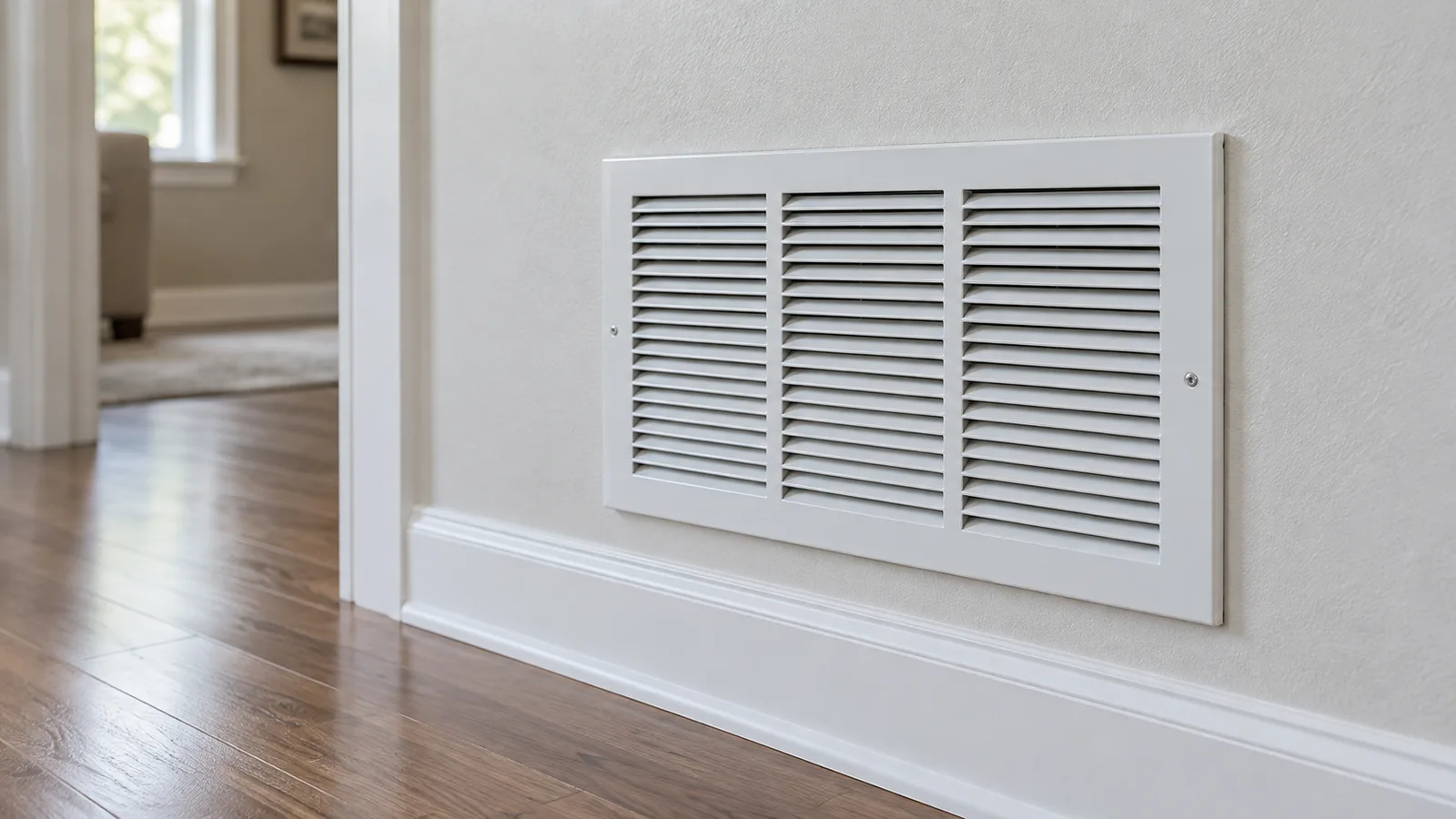
Quick answer: Do not schedule air-duct cleaning solely because heating season is approaching. EPA recommends considering it when specific conditions justify the work, rather than as an automatic routine. Start with a documented concern and an assessment of the actual system—not a coupon, a photograph from another home, or a promise that cleaning will solve every comfort problem.
For a Westchester homeowner or property manager, the useful first question is: “What evidence shows that this system needs this work?” This guide helps you organize that conversation without opening equipment, entering a duct, disturbing suspicious material, or buying a service before its scope is clear. It is general decision guidance, not an indoor-air diagnosis or a promise of better health or lower bills.
Separate the concern from the proposed service
Write down what prompted the question. Was it ordinary dust on a grille, debris apparently coming from a supply opening, a contractor's finding, recent work in the house, or a room that is difficult to heat? Keep the observation separate from the conclusion. “There is dust on this grille” is useful; “the entire system is contaminated” requires evidence you may not have.
Identify the room and the system serving it if known. In a building with several apartments or zones, tell the service provider which area is involved. Photographs taken from a safe standing position can document a visible condition. They do not establish what is inside inaccessible ductwork or identify a substance as mold.
Avoid removing a grille or equipment panel to get a better picture. Do not insert a camera, vacuum hose, cleaning brush, or chemical product into the system. The objective at this stage is to prepare an accurate report, not to perform an inspection that requires professional access and precautions.
What EPA says about the decision
EPA's air-duct cleaning guidance does not recommend routine cleaning for every home. It identifies reasons to consider cleaning, including substantial visible mold in hard-surface ducts or other system components, vermin infestation, and excessive debris clogging ducts or particles being released from supply registers. It also distinguishes ordinary dust at return grilles from evidence of a heavily contaminated system.
These are reasons for a qualified assessment, not permission to diagnose your ducts from a photograph. Ask the professional to show and explain the condition, identify its location, and describe the proposed response. A recommendation should concern your actual system and the observed problem.
Use a decision checklist, not a calendar rule
What prompted the inquiry Useful next question Avoid
--- --- ---
Dust visible on a grille What else supports the recommendation? Assuming a whole-system problem from one surface
Contractor reports contamination Can you show its location and explain the evidence? Accepting an unlabeled picture as proof
Debris appears to leave an opening Which system and component need assessment? Recreating the event or reaching inside
A room is uncomfortable What diagnostic work addresses the comfort complaint? Buying cleaning as an assumed repair
Recent work occurred in the home What was affected, and what has actually been observed? Treating every renovation as an automatic cleaning order
Keep the written answer with the estimate. If the provider cannot explain why the work is appropriate, ask for clarification before authorizing it. You do not need to resolve the technical question yourself in order to require an understandable explanation.
Keep cleaning, filtration and repair distinct
Ask a contractor to name the problem they are proposing to address. A filter-selection question, a duct-leak concern and a cleaning proposal should not be treated as interchangeable jobs. If your main complaint is uneven heating, describe the rooms and times involved and request an assessment of that complaint.
EPA's guidance on household air cleaners and filters explains that filtration can supplement source control and ventilation, but does not remove every pollutant. That is a reason to ask what a proposed measure can and cannot do—not to combine several products into an unexamined “air quality package.”
For a separate filter-selection question, read our MERV filter comparison. Keep any filter change within the equipment's requirements and ordinary owner instructions. Do not open equipment or alter airflow controls to test an advertising claim.
If someone reports mold or moisture
Do not touch, scrape, sample or spray a suspicious substance yourself. Describe what was observed and ask who is qualified to evaluate it. Ask whether the condition is on a hard surface, within insulation, or somewhere else, and what evidence supports the identification. Do not decide that a dark mark is mold from its color alone.
EPA's mold and moisture guide emphasizes correcting the moisture problem as part of addressing mold. The service conversation should therefore include the source of moisture and responsibility for correcting it, not just a proposal to remove a visible mark.
This article does not provide remediation instructions or establish whether a building is safe to occupy. If occupants have health concerns, seek appropriate medical advice rather than relying on a cleaning salesperson to diagnose symptoms. Keep personal medical information out of ordinary maintenance photographs and group messages.
Questions to put in a written proposal
Before approving work, ask for a proposal that you can understand and compare with another assessment. These are practical purchasing questions, not a specification for doing the work yourself:
1. Which system is included? Identify the equipment location and served areas. “Whole house” should not conceal uncertainty about how many systems are present. 2. Why is the work recommended? Request the observations and an explanation of how the proposed work addresses them. 3. What is included and excluded? Ask for the components and access work to be named. Clarify which concerns require a different trade or a separate assessment. 4. How will the occupied space be protected? Ask the provider to explain its process, household preparations and any access restrictions before the appointment. 5. Are products or treatments proposed? Request their names, purpose and written information. Do not approve an unexplained spray, fragrance, coating or treatment as a default add-on. 6. Who will address the underlying concern? If the assessment identifies another problem, establish the next step and responsible party rather than assuming cleaning resolves it. 7. What completion record will you receive? Agree on a written summary, identified photographs where appropriate, and any remaining recommendations.
Do not let an introductory price substitute for that discussion. This guide does not quote a local cleaning price or promise that a particular package is appropriate. Ask for the total proposed scope and how additional work would be authorized before the visit begins.
A practical record for property managers
Make one record per affected system. Include the report date, room or apartment, equipment identifier if known, the original concern, the assessment and the work authorized. Label photographs so that the location is clear, without including residents or private identifying information unnecessarily.
Give occupants a straightforward reporting route. Ask for what happened and when, not a technical diagnosis. Keep the original concern visible in the work order so that “dust near a grille” does not become “confirmed mold throughout the ducts” as the message passes between people.
After any service, retain the completion record and unresolved items. If the original complaint remains, report that fact to the appropriate professional. Do not use a completed invoice as proof that a different comfort, moisture or health concern has been resolved.
Frequently asked questions
Should ducts be cleaned every autumn?
Not automatically. The decision should follow evidence about the actual system and the reason for the proposed work. A change of season is a useful time to review maintenance records, but it is not itself a finding that the ducts need cleaning.
Does a dusty return grille prove that all the ducts are dirty?
No. Document the visible condition without extending it to hidden parts of the system. Ask what additional evidence supports any cleaning recommendation. Do not remove covers or reach into the system to investigate on your own.
Will cleaning solve a cold bedroom?
Do not buy it on that assumption. Report the comfort problem and ask what assessment is appropriate. Our guide to heating vents in unused rooms addresses a different question—whether closing vents is a sensible response—not a diagnosis of your bedroom.
Can I authorize the work from before-and-after pictures?
Pictures are useful only with context. Ask which component they show, where it is, when the image was taken, and what conclusion it supports. Keep them alongside the written scope and completion record rather than treating an unlabeled image as a complete assessment.
Discuss the actual HVAC concern first
If you are unsure what kind of assessment your Westchester heating or cooling concern needs, contact Bravo Mechanical. Share the affected room, equipment information if known, and a short description of what you observed. Ask about the appropriate next step and whether the requested service is offered; this guide does not represent a duct-cleaning offer or a promise that cleaning is necessary.
Request service or an estimate or call (914) 361-9142. Serving 34 listed communities in Westchester County, NY.